Real Sociedad hosted Bayern Munich in a Champions League qualifier first leg on Tuesday 20 September. Here is my analysis of the match.
Basic Formations
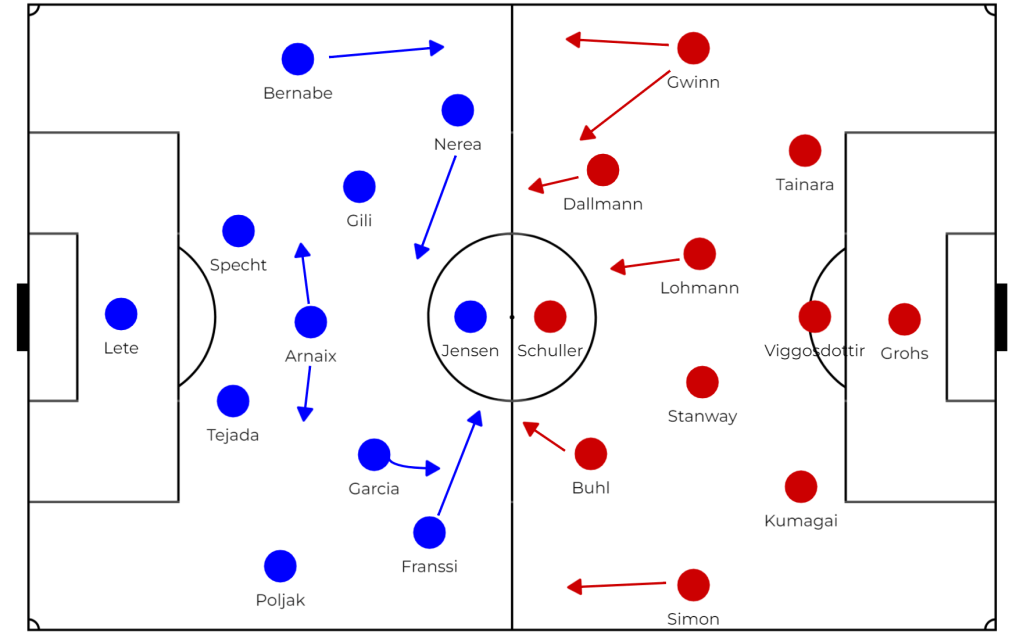
Bayern deny routes into midfield
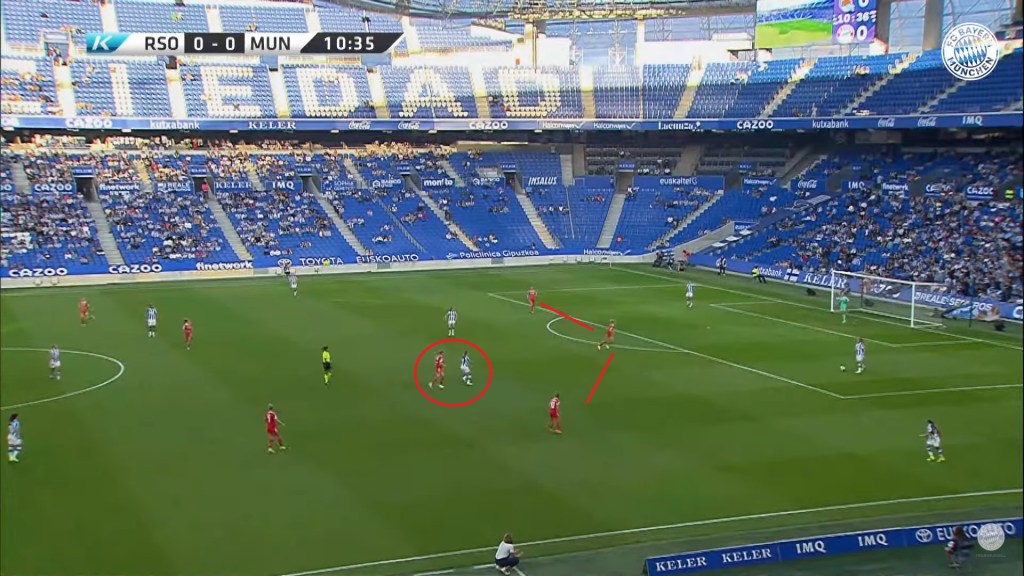
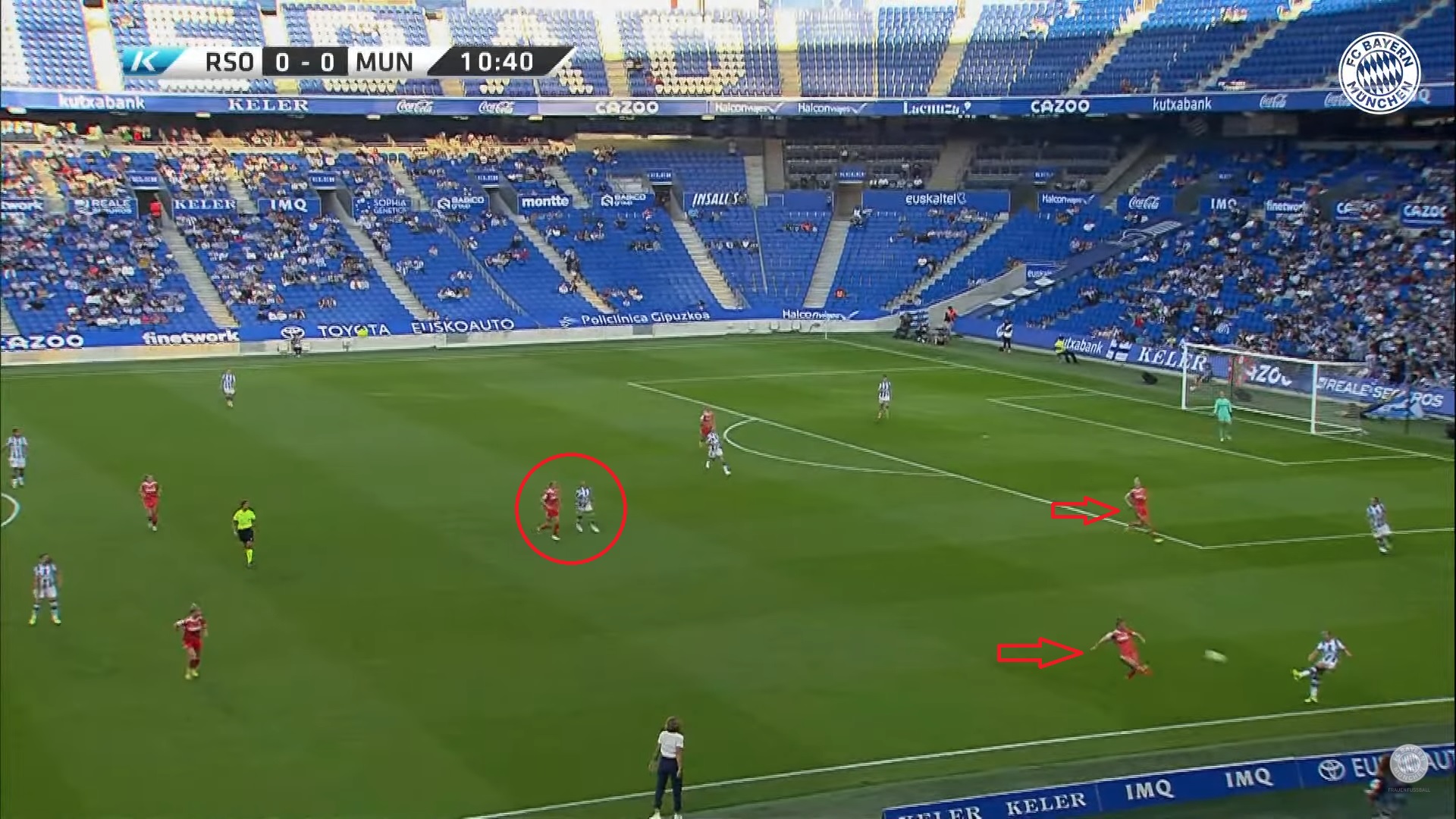
Bayern defended in a 5-2-3 formation with a narrow front 3. They limited Sociedad’s passing angles into midfield, then put pressure on the centre-backs when they could. Noticeably, Schuller closed down Specht, who is a right-footer playing left center-back. Schuller is dangerous pressing because she can start her pressing run later, with the speed to close the space quickly. This can catch the centre-back off guard.
The goal for Bayern appeared to deny possession in central midfield, force Sociedad wide, and press man-to-man near the touchline using their nearest forward, wing-back and midfielder, while Schuller put pressure on the back pass.
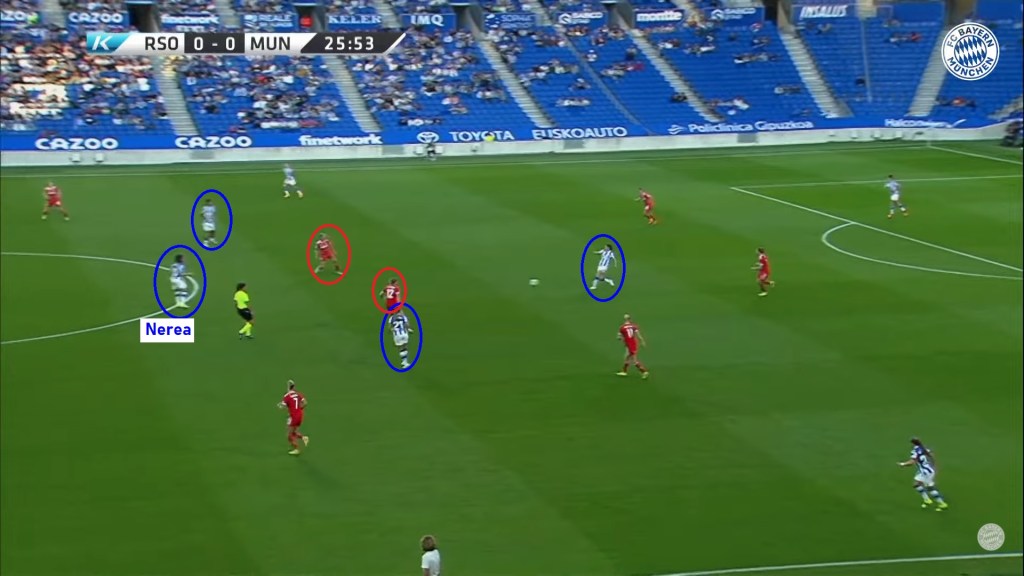
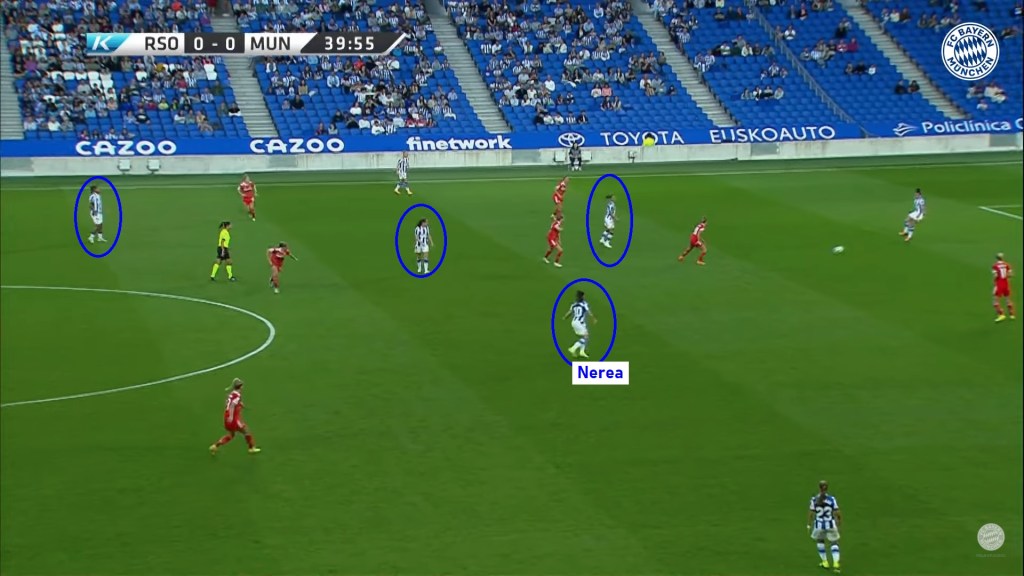
Nerea inside: Sociedad out-number in midfield
Sociedad struggled to play through midfield early on and were forced into more direct play, often clipping the ball from goalkeeper into midfield and losing the aerial battle. However, after some time, they started to find their rhythm and composure. The centre-backs began finding angles into the midfielders, and were helped by the inside positioning of Nerea.
Nerea, listed as the ‘left winger’, played very central, almost in a free role with license to roam across the field and find space for herself. With Nerea central, Sociedad had four players in there and could out-number Bayern’s double pivot of Stanway and Lohmann. Using short passes and little one-twos, Sociedad started to keep the ball more, build up their attack patiently and penetrate through the middle more consistently.
Garcia runs cause problems
Another sub-plot was the channel running of Garcia. Starting as the right central midfielder, she twice ran into the space between Bayern’s left wing-back and left centre-back when Bayern pressed on that flank. This was difficult for Bayern to cover, because they only had two midfielders and usually out-numbered 3 or 4-versus-2, so didn’t always have cover to deal with Garcia. Another issue was that Sociedad ‘right winger’ Franssi came inside and acted more as a striker, attracting the attention of Kumagai and opening the space for Garcia.
Bayern attack directly, exploit disjointed Sociedad defence
Sociedad defended in a 4-5-1 and tried to press high, with aggressive man-marking from Garcia and Gili on Stanway on Lohmann. The third midfielder, Arnaiz, played the holding role, covering behind them, picking up any free players and sometimes filling in to the back line or tracking runs. Arnaiz had to cover a lot of ground to enable Sociedad to be so aggressive, at times making Sociedad’s defence more of a 5-4-1.
The problems with this man-marking system were seen on 44 minutes for Bayern’s goal. Arnaiz switched off momentarily, giving Buhl space to receive inside-left. Buhl was free to play forward, and slipped in Schuller to score.
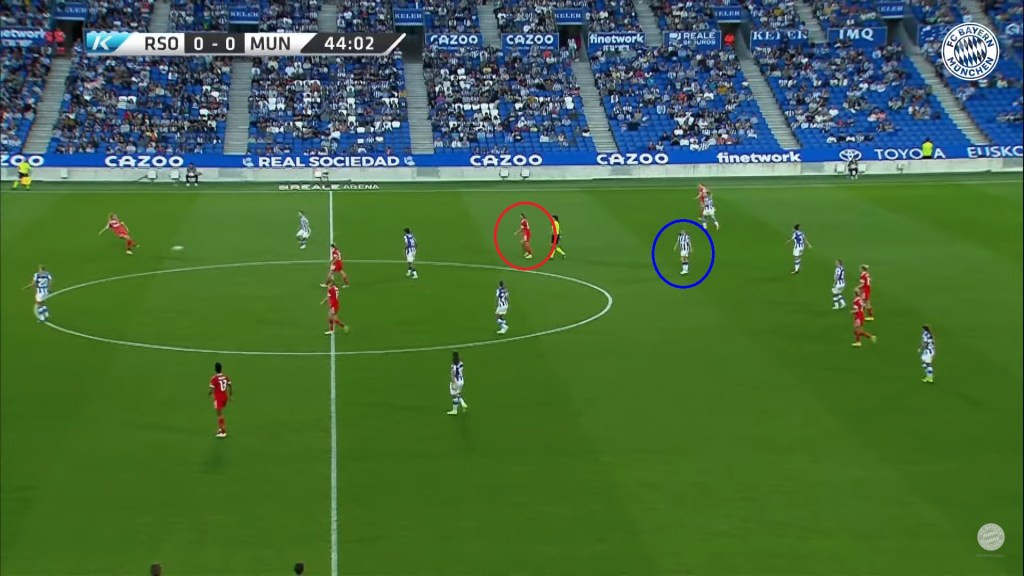
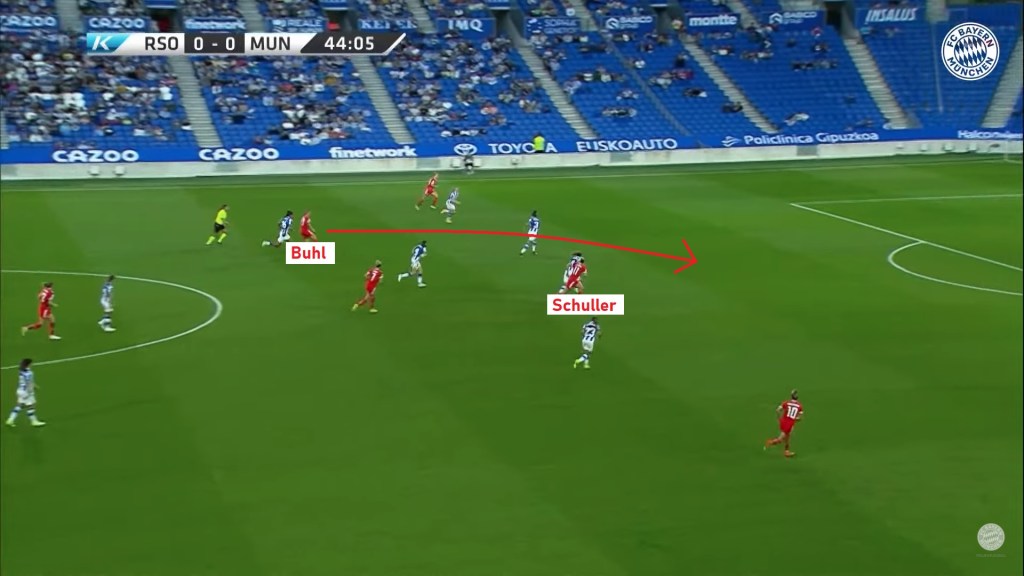
Sociedad also struggled to keep up with the runs behind their defence from Schuller, Buhl and Dallmann. Gwinn also made some unorthodox runs behind, coming in from her right wing-back starting position, which were difficult to track. The sheer number and speed of runs was difficult for Sociedad to cope with. There were moments where their back line looked very disjointed.
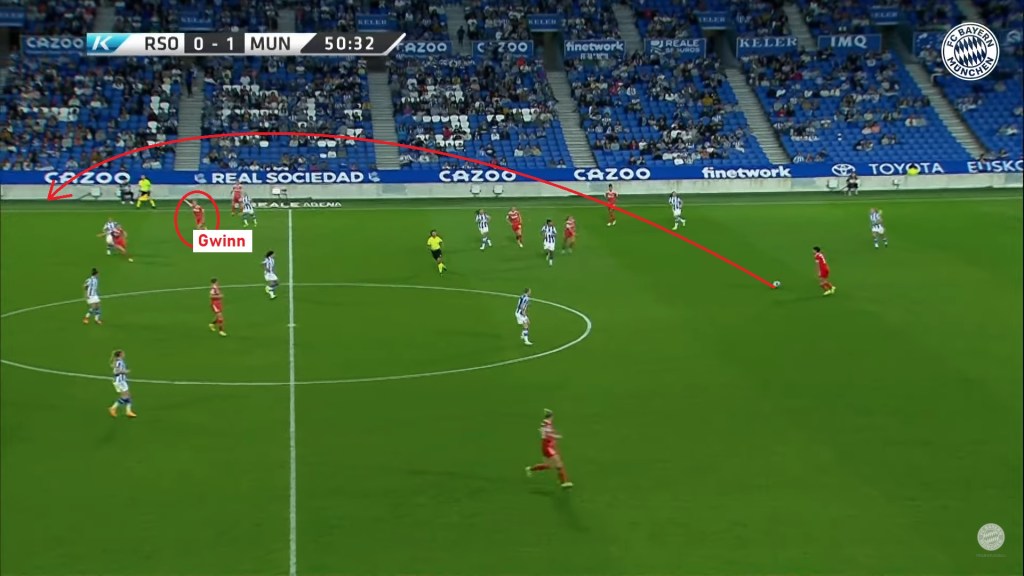
Bayern played very directly from back to front to avoid Sociedad’s midfield pressure and exploit their back line disorganisation. Sometimes Bayern got in behind with one ball, sometimes they lost the first ball but had Lohmann on hand to pick up the second ball and, using her power, drive the attack forward single-handedly under pressure.
Bayern adjust defensively
Bayern made a defensive adjustment for the second half, going to a 5-3-2. Buhl came into midfield and marked Garcia. This made it harder for Garcia to go un-tracked in the channel, and it helped Bayern match up more in midfield. Now, Sociedad’s centre-backs had easier passing angles into midfield, but their midfielders had less time on the ball.

Bayern fade, Sociedad finish strong
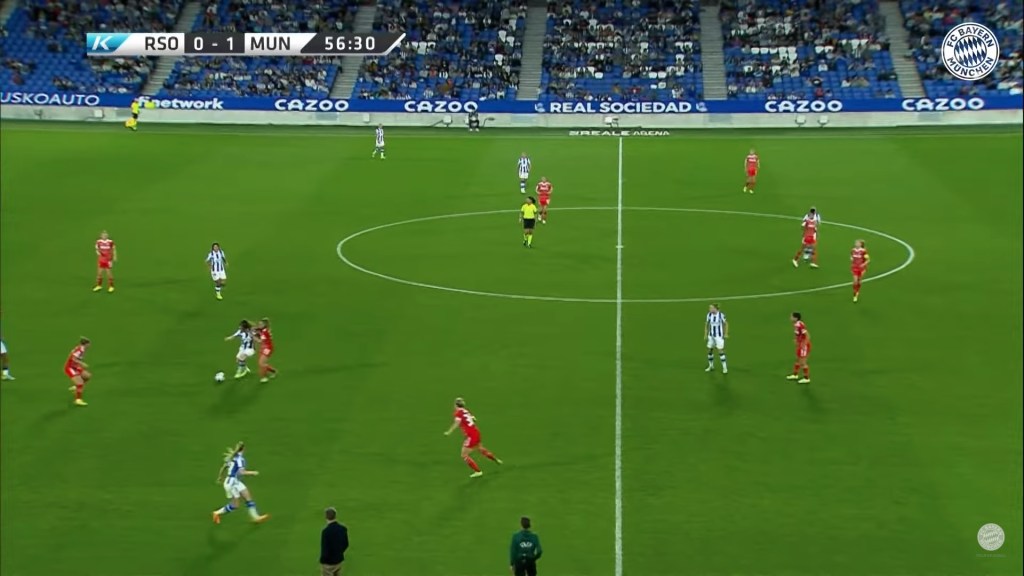
However, around the hour-mark, Bayern’s pressing intensity started to fade. Suddenly, Sociedad’s midfielders were getting more time on the ball. They could keep it more comfortably, and could turn and penetrate more easily. Bayern perhaps tired because they had kept possession less and had to do more running than Sociedad.
Eventually, Bayern changed again to a 5-4-1 low block. Sociedad dominated possession for the last 20 minutes, and were able to work dangerous balls for their attacking midfielders and strikers to attack in the box.
Bayern just held on to their 1-0 lead with some good goalkeeping and last-ditch defending. At the same time, they could have scored more themselves earlier, having exploited Sociedad’s back line disorganisation directly with long balls over the top for runners like Schuller, Buhl, Dallman and Gwinn.
Discover more from Women's Soccer Report
Subscribe to get the latest posts sent to your email.
